


It can be said that there are two forms of eternal life; the first form is the immortality of individuals. However, throughout millions of years of evolution on Earth, this ability has not occurred. Instead, there has been a process of development and evolution from one generation to the next. The duration of existence depends on the genetic material to be passed down through generations.
According to natural laws, the permanent existence of individual life is unreasonable and unfounded. Individual life that exists without evolution renders the purpose of survival meaningless, which would hinder the evolutionary process.

The second form of immortality occurs when humans have developed to a certain level. It is eternal life that requires a biological shell. The experiences and wisdom of humanity can be preserved and accumulated forever without the need for genetic transmission from one generation to the next.
Humanity has accumulated a vast amount of knowledge while also exploring extensive insights across many fields. However, technology and human knowledge do not correspondingly develop alongside each other. The intelligence and potential of individual life have not been able to keep pace with the explosion of knowledge and the complexities of the world.
But through neuroscience, machine learning, artificial intelligence, and other technologies to preserve, accumulate, and manage the collective experiences and knowledge of humanity permanently, this is also a form of immortality. This immortality encompasses all the life experiences of humanity, not just the immortality of individual lives.
If the experiences and consciousness of individuals could be extracted like reading data, and individual consciousness could exist in electronic form, then the immortality of individuals could be realized in a virtual form.
Regarding consciousness uploading, scientists have conducted research and exploration. Researchers have begun experimenting with lower animals, extracting memories from one snail and implanting them into another snail.

There is evidence that at least a small part of memory is stored in genetic code. Experiments by scientists have shown that some memories are indeed encoded in the molecules that constitute the biological genetic mechanism.
If we lived in a world similar to that depicted in The Matrix, learning new things would be as simple as downloading them into our brains.
In a laboratory in Los Angeles, a group of researchers successfully transferred the memory of a trained snail into the brain of an untrained snail. In other words, scientists found a way to erase memories from one animal and implant them into another, allowing the second animal to remember what only the first animal knew.
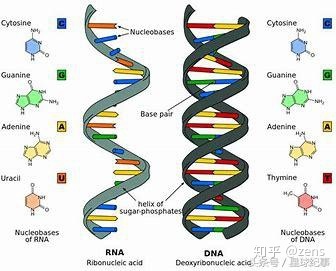
This revolutionary experiment was done by injecting ribonucleic acid (RNA), a molecule known as a “cell messenger,” which performs several important functions, such as protein coding.
Biologists used a sea snail species called Aplysia. The snails used in the experiment were given an electric charge to allow them to send simple signals through their nervous systems.
These sea snails were then shocked multiple times to enhance their defensive withdrawal reflex, a form of response that expresses defense against potential harm.
Later, when scientists gently tapped these snails, they found that the snails that had previously been shocked exhibited a withdrawal reaction to protect themselves that lasted an average of 50 seconds. In contrast, the snails that were not shocked only retracted for about 1 second. This is a simple behavior based on memory.
Next, they extracted RNA from the nervous systems of the shocked sea snails and injected it into the non-shocked snails. Remarkably, scientists discovered that the snails receiving RNA from the shocked snails exhibited behavior as if they had themselves been shocked: they displayed a withdrawal reflex lasting an average of about 40 seconds.

Scientists at the University of California, Los Angeles have demonstrated that they can successfully extract memory from one snail in the form of RNA and transfer it to another snail. Surprisingly, the snails that received RNA from the first snail began to act as if they had personally experienced the training.
Experts believe this breakthrough could aid human studies on neurology and memory. RNA research may also help treat those with traumatic memories and even aid recovery from amnesia.
However, this is still just preliminary experimentation, and whether humans can achieve eternal life remains speculative without any reliable evidence so far.