


Promising to bring groundbreaking potential to change many scientific fields in the world, one of the biggest issues that has persisted for decades with quantum computers is the stability of these systems. However, this may soon change forever thanks to the research work of a young student at the University of Sydney, Pablo Bonilla.
The main component in quantum computers is qubits – the switches of quantum computing. Essentially, they are similar to transistors in today’s computing devices. However, these qubits are particularly sensitive to disturbances from the external environment. Even a slight change in temperature, sound, gravity, or external magnetic fields can cause errors in these qubits as well as the algorithms running on them.
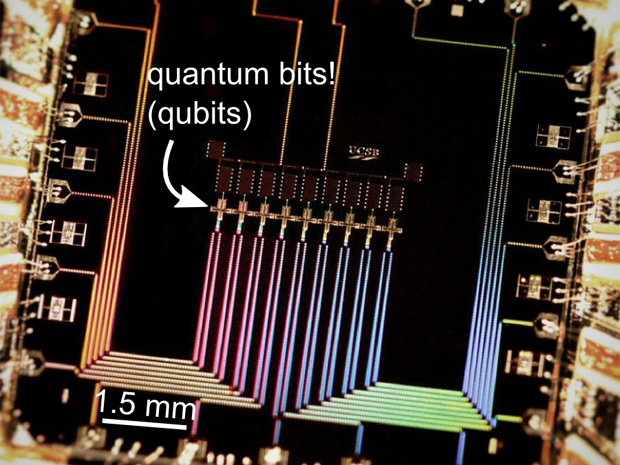
To improve the stability of quantum computers, scientists have developed an algorithm called Quantum Error Correction – a quantum error correction algorithm – designed to identify and correct errors in quantum computers.
In this algorithm, quantum information stored on a single qubit is also distributed across supporting qubits – in other words, information is encoded in a logical quantum bit. This approach has been used for about 2 decades on quantum computers. Although this algorithm ensures the integrity of the information, it comes at the cost of consuming many qubits for storing the information. The more noise there is, the more qubits are needed to preserve the information. Depending on the hardware nature and the type of algorithm, it could require up to 1,000 qubits to achieve a single logical qubit.
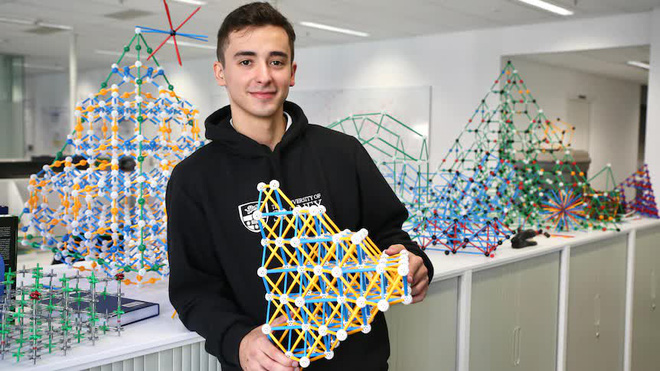
One of the homework assignments for Bonilla, a second-year student at the University of Sydney, was to find ways to improve the efficiency of this algorithm. However, it turned out that a persistent problem in quantum computers for nearly 2 decades could be solved thanks to a “simple yet brilliant” change by Bonilla in the quantum error correction algorithm. After being refined by Bonilla’s changes, the self-correcting ability of quantum computers has doubled.
Bonilla stated: “By flipping half of the quantum switches, or qubits, in my design, we found that we could double the efficiency of error elimination.”
The young student’s discovery quickly attracted the attention of leading researchers in quantum computing. The Quantum Computing Technology Research Center of the tech giant Amazon Web Services, as well as Yale and Duke Universities, are all interested in this new finding.
Professor Shruti Puri from Yale University’s Quantum Research Program stated: “What astonished me most about this new line of code is its marvelous sophistication.”
Mr. Ben Brown, Bonilla’s mentor and co-author of Bonilla’s research, expressed his own astonishment at the discovery made by his student, as no one had recognized it over the past 2 decades. Bonilla’s research is now published in the journal Nature Communications.
Reference: The Mandarin