


The recent catastrophic price drop in the cryptocurrency market has shocked investors worldwide. But Vitalik Buterin is not among them – despite the crisis wiping out a significant portion of his personal wealth.
In fact, the 27-year-old co-founder of Ethereum shared in an exclusive interview with CNN that he believes the cryptocurrency market is in a bubble.
However, he emphasized that it is “very unpredictable” when the bubble will burst.
“It may have already ended,” Buterin said. “It may end a few months from now.”
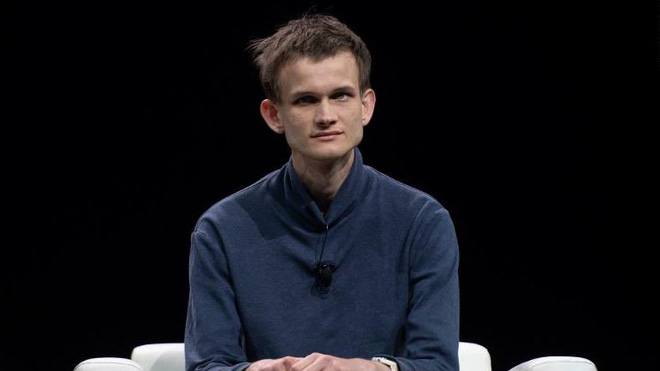
On the morning of May 19, Ethereum, the internal currency of the network invented by Buterin, dropped below $1,900 – a staggering decline of over 40% compared to the night of May 18, according to Coinbase. It then recovered to around $2,700 on the morning of May 20, but this price is still significantly lower than the record high of $4,384 on May 11.
This incident may have cost Buterin dearly. The value of Ethereum in Buterin’s public wallet stood at around $870 million on the morning of May 20, down significantly from about $1.1 billion a day earlier. Although only 27 years old, Buterin is a “veteran” in the cryptocurrency market, having experienced enough boom and bust cycles over the years.
“So far, we have seen the cryptocurrency bubble burst at least three times,” said the Russian-Canadian programmer who dropped out of college. “And often the reason bubbles end is due to an event that occurs and shows that the technology of cryptocurrency is still not ready.”
“Cryptocurrency is not just a toy”
Buterin presented his vision for Ethereum in a white paper in 2013, and the cryptocurrency was launched two years later. Today, it is the second-largest cryptocurrency in the world, behind only Bitcoin.
Unlike Bitcoin, which is seen as “digital gold”, Ethereum is a blockchain-based platform for developers to build and operate applications. It is akin to the Android or iOS operating system of the cryptocurrency space.
At the end of 2017, Buterin questioned whether the cryptocurrency space could actually achieve its market valuation. At that time, it had just surpassed the $500 billion mark. He noted that it had achieved very little in reality and that cryptocurrency prices would soon rise.
However, what Buterin values is not the FOMO mentality of the community, but the encouragement from the “huge” advances that cryptocurrency technology and applications have made in recent years.
For example, Ethereum’s activity has surged in recent months as it is the network supporting the sale of many non-fungible tokens, also known as NFTs.
“It seems that cryptocurrency is close to being ready to become more mainstream than it was four years ago,” Buterin said. “Cryptocurrency is no longer just a toy.”
Buterin added that while he is not certain, there is a “possibility” that Ethereum will eventually catch up and surpass Bitcoin in market value.
“The Elon Factor”
However, Ethereum and cryptocurrency in general still face issues. Firstly, they remain extremely volatile, especially for retail investors who are accustomed to stock market moves.
And “some billionaires” seem to treat cryptocurrency as a toy. A typical example is Elon Musk, who has caused seismic waves in the market with his cryptocurrency antics.
Community sentiment shifted dramatically after Musk tweeted on May 12 that Tesla would stop accepting bitcoin payments due to concerns over the environmental issues of cryptocurrency. $365 billion in market value vanished that day, according to CNBC.
Buterin acknowledged that the cryptocurrency market tends to be “vulnerable” to disruptive events before it can “build up an immunity over time.”
“Elon Musk’s tweets are something that the cryptocurrency space has only just encountered literally in the past few months,” Buterin said. “I think it’s reasonable to expect a bit of craziness. But the market will learn, and Elon won’t be able to have this kind of influence forever.”
The Tesla CEO has also repeatedly pumped Dogecoin, a cryptocurrency that started as a joke, before mocking it in his appearance on Saturday Night Live earlier this month. Buterin is very concerned about Musk’s obsession with Dogecoin.
“The reality is that whether you’re a billionaire with over $100 billion or the CEO of Tesla and SpaceX, all of this doesn’t change the fact that he is ultimately just a human – and humans have a strange connection with dogs,” Buterin shared. “I don’t think Elon Musk has any ill intentions behind his actions.”
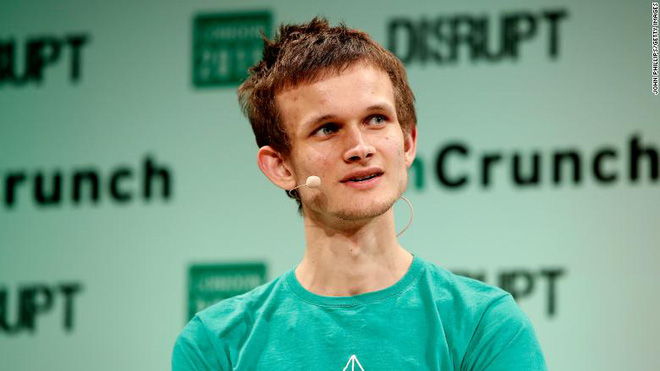
Vitalik Buterin, the co-creator of Ethereum, stated that governments cannot completely stop blockchain but can make it harder for people to access.
“Please don’t give me cryptocurrency”
Another trending animal-themed cryptocurrency besides Dogecoin that many are excited about is Shiba Inu, which also started as a joke.
This coin lost about one-third of its value last week after Buterin donated about $1 billion worth at that time to a Covid-19 relief fund in India.
“The challenge with these ‘dog coins’ is that the market for them is still quite thin,” Buterin said. “In fact, there is no way to sell a billion dollars worth of Shiba Inu and bring in more than a few million dollars due to significant slippage.”
Buterin has also recently announced plans to burn, or remove from circulation, 90% of his Shiba Inu cryptocurrency, which he received as gifts from many people. Buterin emphasized that he does not want to be “gifted coins” by “some people” for marketing purposes.
“First of all, I don’t really know or understand many of these projects. So I can’t endorse them,” he said. “I see a few thousand dollars of something called free coins in my wallet. I don’t know what they are.”
Buterin urged those who want to “do something warm and fuzzy” with cryptocurrency to donate it directly to charity.
Governments Can Make It Harder for Cryptocurrency to Survive
The recent cryptocurrency sell-off was partly triggered by concerns over a crackdown in China. A trio of Chinese financial and banking regulators stated on May 18 that financial institutions and payment companies should not engage in any transactions related to cryptocurrency, nor should they provide any cryptocurrency-related services to customers.
Speaking about policy information from China, Buterin acknowledged that regulations are “always a concern”, although fears of outright bans have lessened.
“Doing anything like that seems much harder and less realistic,” Buterin said. “But at the same time, governments have a lot of power to make participation in cryptocurrency harder.”
Although blockchain is decentralized and “governments cannot completely take them down,” Buterin stated that governments can block or limit access.
“It is important to listen to regulators to try to do our best to address concerns,” the father of Ethereum also added that one of the risks is that the relationship between cryptocurrency and regulators becomes “more adversarial than necessary.”
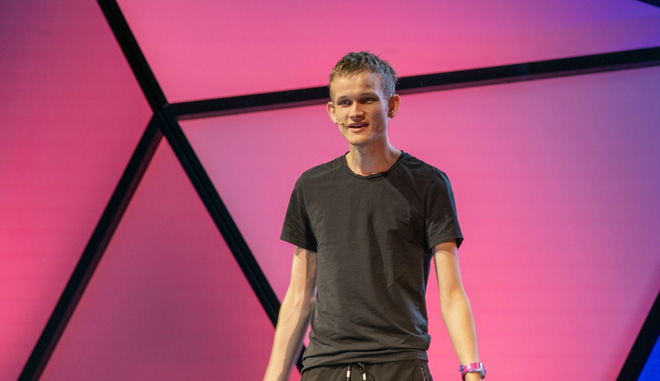
Ethereum Fees Will Decrease
Another significant issue that the Ethereum network is facing is the excessively high transaction fees, affecting user experience. Vitalik Buterin acknowledged this issue and admitted that currently, the system can only handle 20-50 transactions per second, while the demand far exceeds that number.
But he stated that he is “very confident” that costs will soon decrease, as a major technical overhaul is underway that will allow it to scale quickly.
Ethereum is moving away from Proof of Work, the original algorithm in blockchain technology, towards a newer concept called Proof of Stake. Simply put, this upgrade means that participants in the system are incentivized with rewards, paid in Ethereum, to stay online and keep the network maintained. According to a recent study, the switch to Proof-of-Stake will help Ethereum reduce energy consumption by up to 99% compared to mining.
“We will go from consuming energy similar to a mid-sized country to consuming energy like a village,” Buterin said.
And he does not rule out the possibility that Ethereum may one day “catch up and even surpass Bitcoin” to become the largest cryptocurrency in the world.
“If Bitcoin sticks with its technology, the Proof-of-Work path, and mining as it is now, there is a significant risk that it will be left behind,” he asserted.
Referenced from CNN