


Earth has undergone a long period of 4.6 billion years, and by this measure, the lifespan of humans on Earth is still very short. Homo has only appeared on Earth for the past 2.5 million years, and Homo sapiens, the ancestors of humanity, have hardly evolved for nearly 200,000 years.

Over the past four billion years, life on Earth has been endless. However, currently, there are only about 10 million species on Earth, which is only 1% of the total number of species that have ever lived on Earth, with the remaining 99% having disappeared in the long river of Earth’s history.
Although our planet is vibrant, it is very difficult for any species to exist for a long time on Earth. Over time, Earth’s climate will continue to change, and some ancient species have been unable to adapt to these changes, leading to extinction.
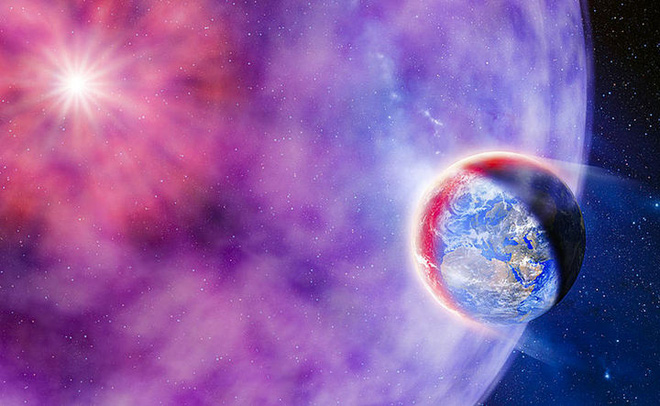
In addition, life on Earth may also be threatened by deadly hazards from space. For example, a gamma-ray burst from a supernova could destroy Earth’s atmosphere and allow lethal cosmic radiation to reach the surface of our planet. Most life on Earth would not be able to withstand this. 450 million years ago, a supernova caused a mass extinction due to the first space threat on Earth. On the other hand, the impact of a giant asteroid falling to Earth would also cause drastic changes in climate, disrupt the food chain, and result in mass deaths of life on Earth. The fifth mass extinction 65 million years ago was likely also due to a collision with an asteroid.
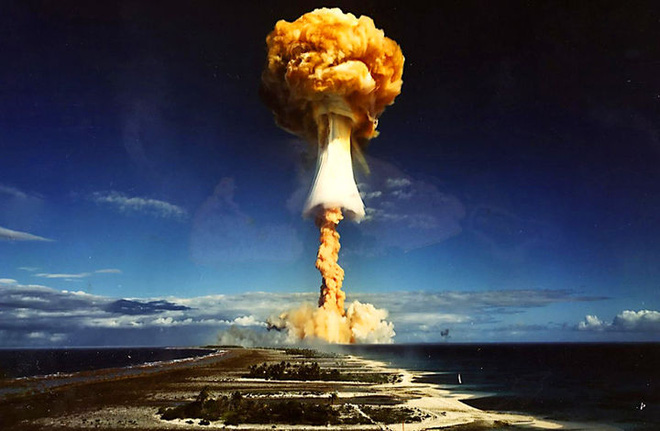
Besides the threats from space, there may also exist superbugs on Earth that humans cannot combat. Humanity also possesses nuclear weapons capable of destroying all life on Earth. Although humanity has enough intelligence to create such a powerful weapon, it remains uncertain whether humanity has enough wisdom not to use nuclear bombs on a large scale.
And for various reasons, Hawking believed that to continue existing, humanity must expand its living environment into space in the future. Only by taking precautions and leaving Earth before disasters occur and colonizing other planets can humans better cope with unknown catastrophes.
So which planets should humanity migrate to? Is there a “second Earth” in the universe?
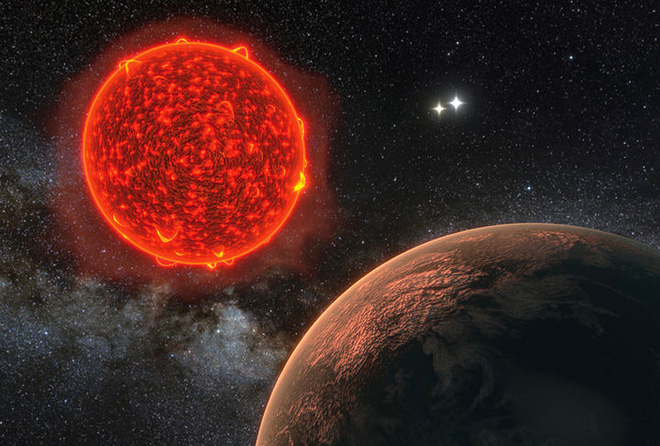
The host star of Proxima b is Proxima Centauri – part of a trio of peculiar stars that scientists are still studying. The other two stars are binary stars – meaning they orbit around a common center and are collectively called Alpha Centauri. Although this “second Earth” has characteristics similar to Earth – where we live, Proxima b remains a mysterious and alien world.
In the solar system, although life may exist on some moons, there are no planets outside of Earth suitable for human survival. To achieve the goal of space colonization, we can only look beyond the familiar solar system.
Current statistics show that almost every solar system has planets, and there are hundreds of billions of stars in the Milky Way, so there are many targets to choose from. Humans need to select rocky planets located in the habitable zone, as only when the distance between the planet and the sun is neither too close nor too far can liquid water exist on its surface.
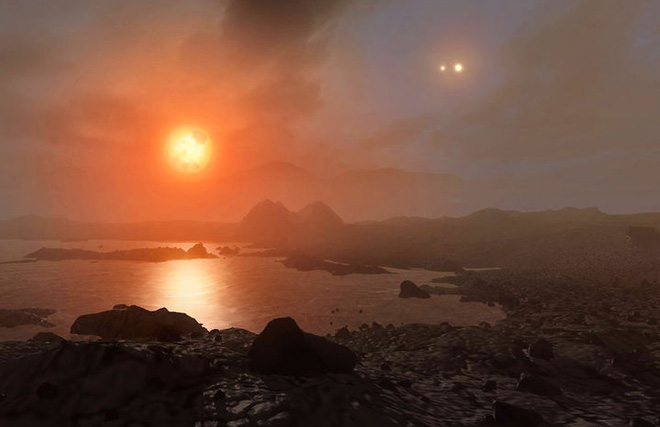
Proxima b exists right in the habitable zone of its star, theoretically where water can exist in liquid form. Compared to our sun, the habitable zone of Proxima Centauri is very close to its host star. Scientists previously believed that red dwarf stars like Proxima could not support habitable planets because they orbit too closely. But now, scientists think that red dwarf stars could be the best place to search for other potentially habitable planets.
Recently, astronomers have discovered Proxima Centauri, the closest star to our solar system, has a planet named Proxima Centauri b. This planet is a rocky planet the size of Earth and is also located in a habitable zone.
Although Proxima b is the closest exoplanet to the solar system at a distance of only 4.2 light-years, humanity currently does not have the capability to fly to this planet. Even with the fastest spacecraft available today, it would take tens of thousands of years to reach Proxima b. However, humanity has never backed down from challenges; we have been able to cross oceans and the vast interstellar space to reach distant worlds, so it is very likely that in the future, humanity will set foot there.