


Humanity is continuously exploring housing solutions for the future, especially if climate change reaches extreme levels and people no longer have a place to live on land.
Climate change, melting ice caps, and the thermal expansion of warming ocean water could lead to rising sea levels, posing a significant threat to human civilization. The global average sea level has risen by approximately (21–24 cm) since 1880 and continues to rise annually at alarming rates.
A new project called “One Day, 2050” from Sony imagines the future and how people will live in Tokyo in 2050. One of the project’s products is a model of seaside housing developed in collaboration with science fiction scientists.
The company explains that the project encompasses thematic keywords such as “2050”, “Tokyo”, and “romance”. Sony’s designers and science fiction writers held workshops to explore life, living environments, senses, and happiness in 2050. The creative efforts have resulted in a series of design prototypes and short science fiction stories.
Each design prototype will present ideas related to the message of each theme.
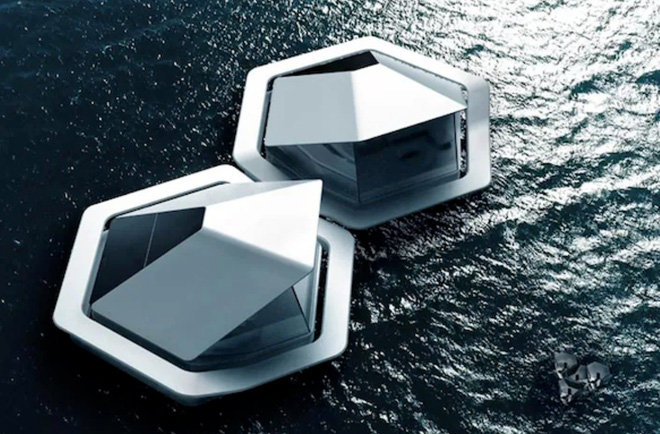
“Living environments” feature nomadic communities at sea, where they coexist with nature. Imagining life in the not-so-distant future, coastal cities are replaced by floating homes for refugees displaced by climate change and those rendered homeless by rising sea levels. With no land to live on, people must resettle in shell-like homes drifting on the ocean, seeking food and safe shelter.
According to Sony, the floating shell houses will have a double structure that remains stable even during storms. The outer shell is designed to deflect waves and reduce shaking. Inside this house is where people will live their daily lives.
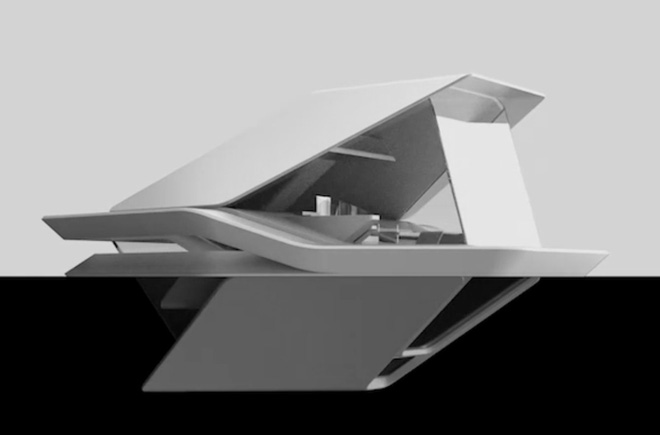
The spacious compartments feature three levels for living both above and below the water, all connected by staircases. Since the project and prototypes are still in the conceptual stage, the amenities within the compartments are not detailed. However, we can imagine they will have designs and interiors reminiscent of bunkers in science fiction movies.
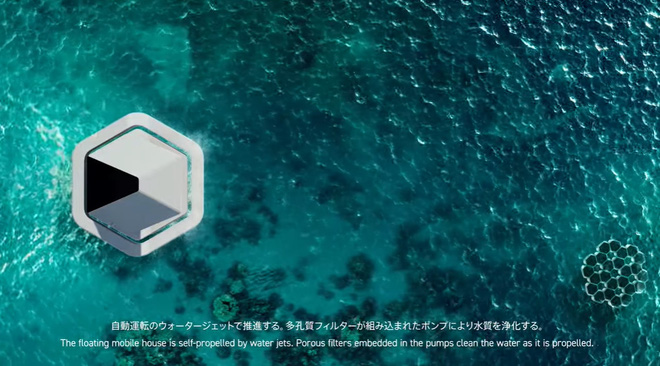
To move through the water, these homes utilize water jets. Besides the battery located at the bottom of the house and the energy tank, the shell is equipped with solar panels on the roof to harness solar energy. Additionally, the house will purify water using a filtration pump system while moving across the ocean.
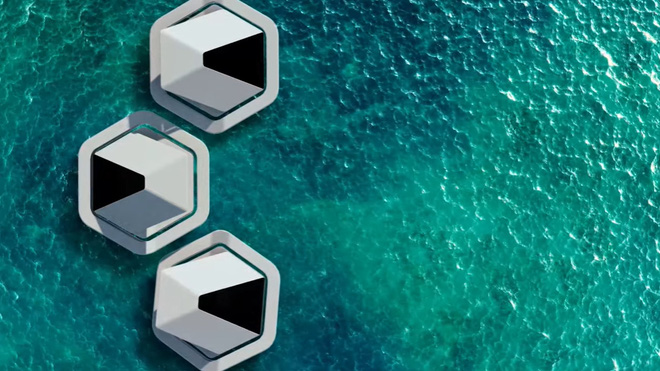
When two or more houses meet, they can form a structure resembling a beehive, potentially creating a “floating city”. When connected, they can also transfer energy from one energy tank to another at any time, forming an electrical system.
Source: InterestingEngineering